Bookkeeping & Expenses Hub

Build Financial Organization Systems That Scale

Learn how to organize expenses, manage bookkeeping, track financial records, and build repeatable systems that keep your business financially organized year-round.

Start With The Expense Tracking System

What You’ll Find in the Bookkeeping & Expenses Hub

The Bookkeeping & Expenses Hub contains the guides, systems, templates, and resources self-employed professionals need to organize financial records, track business expenses, maintain accurate bookkeeping, and prepare for tax season.

Whether you’re a freelancer, consultant, contractor, or service-based business owner, these resources help create repeatable financial workflows that reduce administrative stress and improve visibility into business performance.

New to Bookkeeping?

Self-Employed Expense Tracking System


Self-Employed Bookkeeping Guide


Monthly Bookkeeping System


Expense Tracker Template


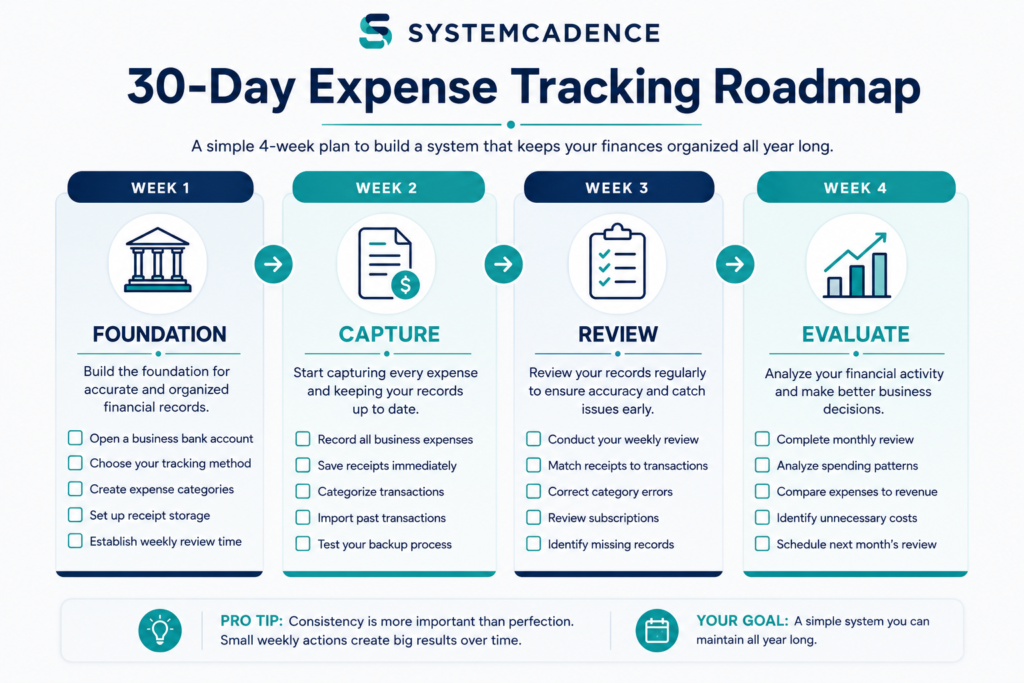
Self-Employed Expense Tracking System

Learn the complete process for capturing, organizing, reviewing, and managing business expenses.
Read Guide

SystemCadence Financial Operations Framework™
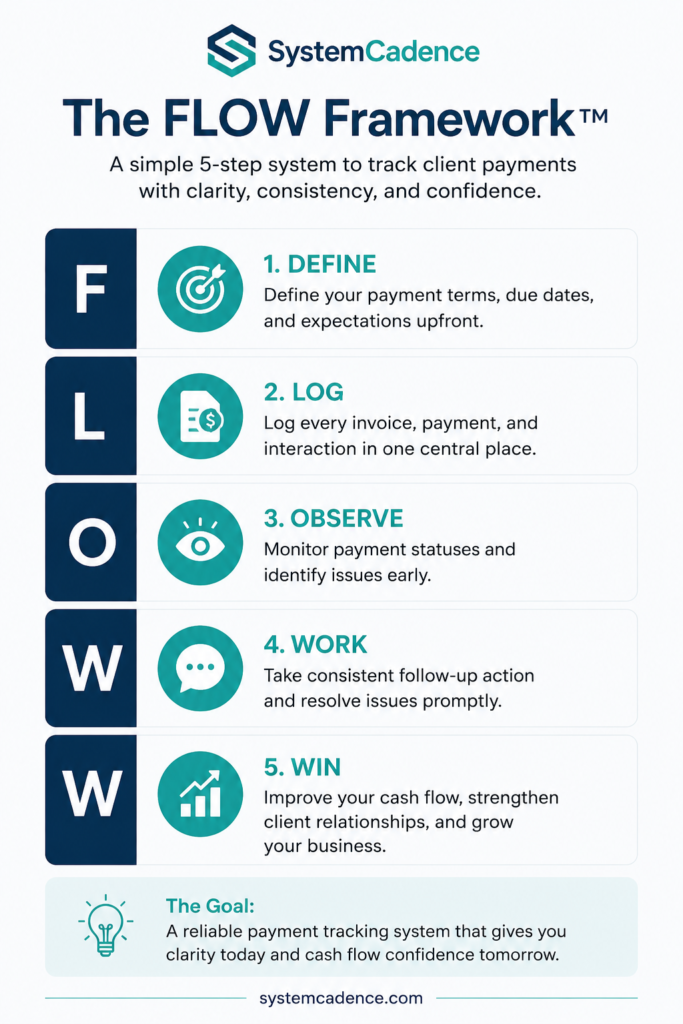
SystemCadence FLOW Framework showing the four-step client payment tracking workflow: File the Invoice, Log the Payment Status, Observe Due Dates, and Work Follow-Ups.

The SystemCadence Financial Operations Framework™ helps self-employed professionals build repeatable systems for bookkeeping, expense management, tax preparation, and financial organization. Rather than treating financial tasks as one-time events, the framework focuses on creating sustainable workflows that improve visibility, reduce administrative stress, and support long-term business growth.

The resources below are organized to help freelancers, independent contractors, consultants, and service-based business owners build stronger financial systems and workflows.

Bookkeeping & Expenses

Bookkeeping Systems
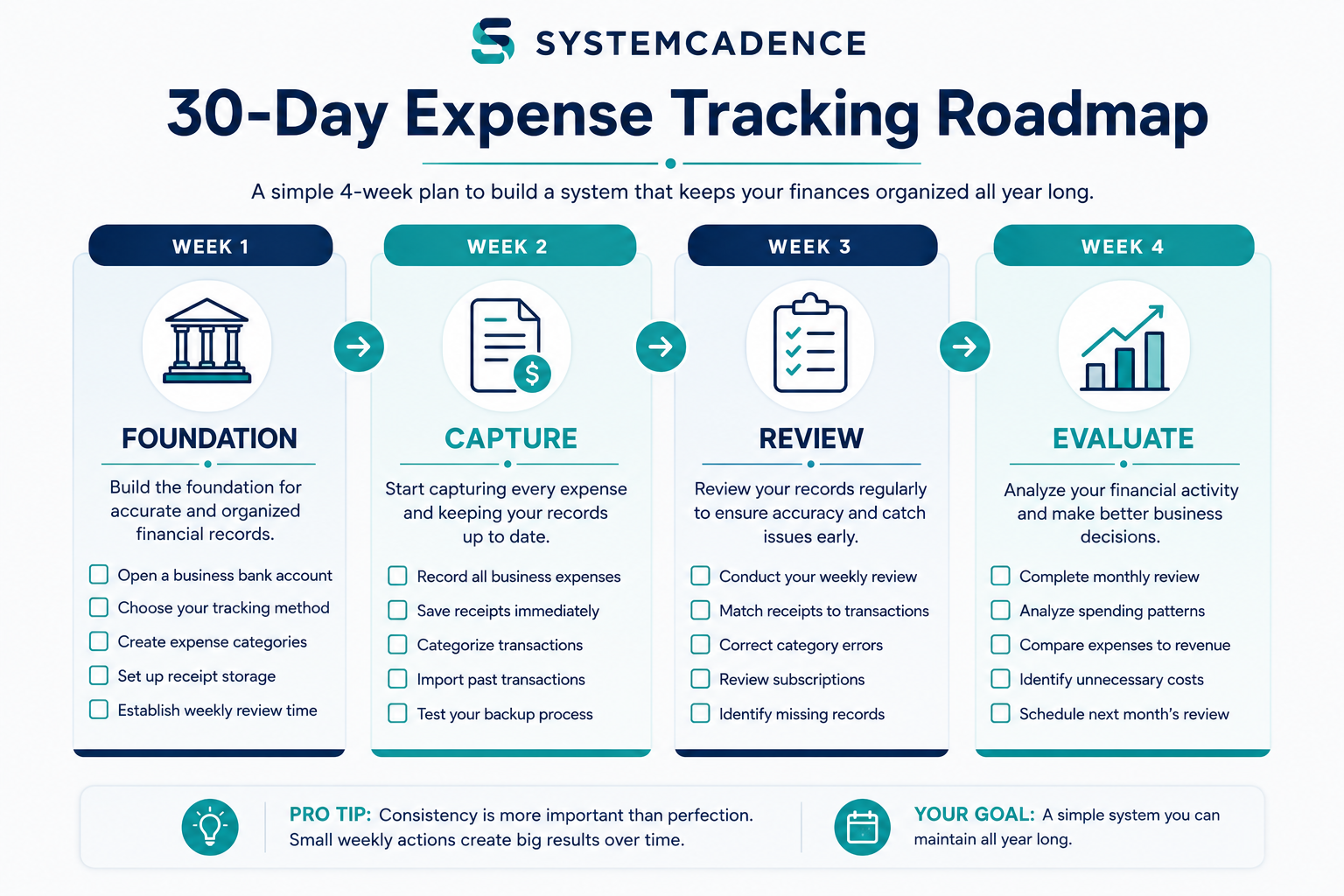
Self-Employed Bookkeeping System

Learn a repeatable bookkeeping process for organizing transactions, maintaining accurate records, and keeping your business finances up to date year-round.
read now
Monthly Bookkeeping Checklist

Follow a step-by-step monthly checklist to review accounts, reconcile transactions, and keep your financial records organized and accurate.
read now
Bookkeeping Workflow
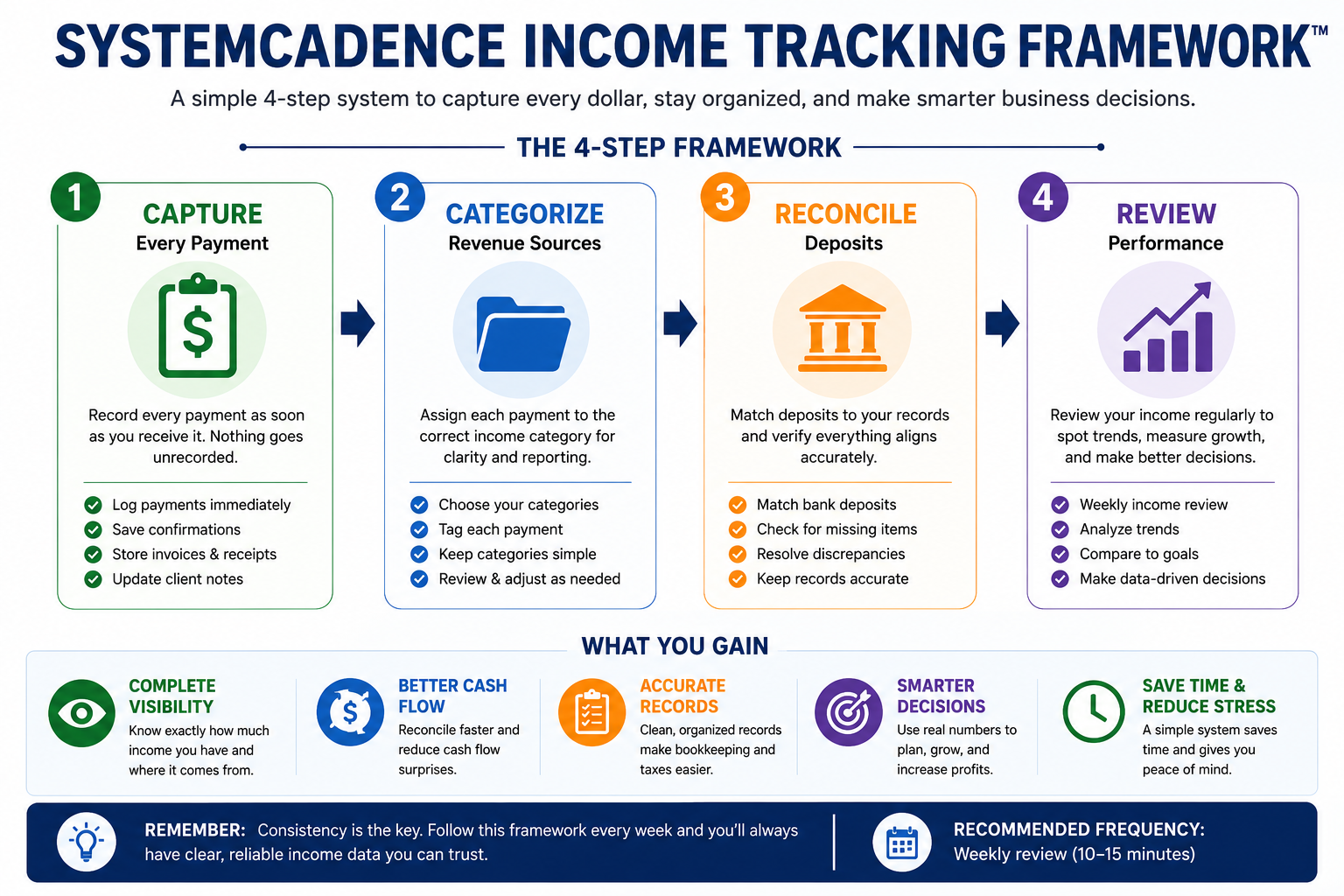
SystemCadence Income Tracking Framework showing the four-step income management process: Capture, Categorize, Reconcile, and Review.

Discover a simple bookkeeping workflow that helps self-employed professionals manage financial records consistently and reduce administrative stress.

read now

Bookkeeping & Expenses

Expense Tracking
Self-Employed Expense Tracking System
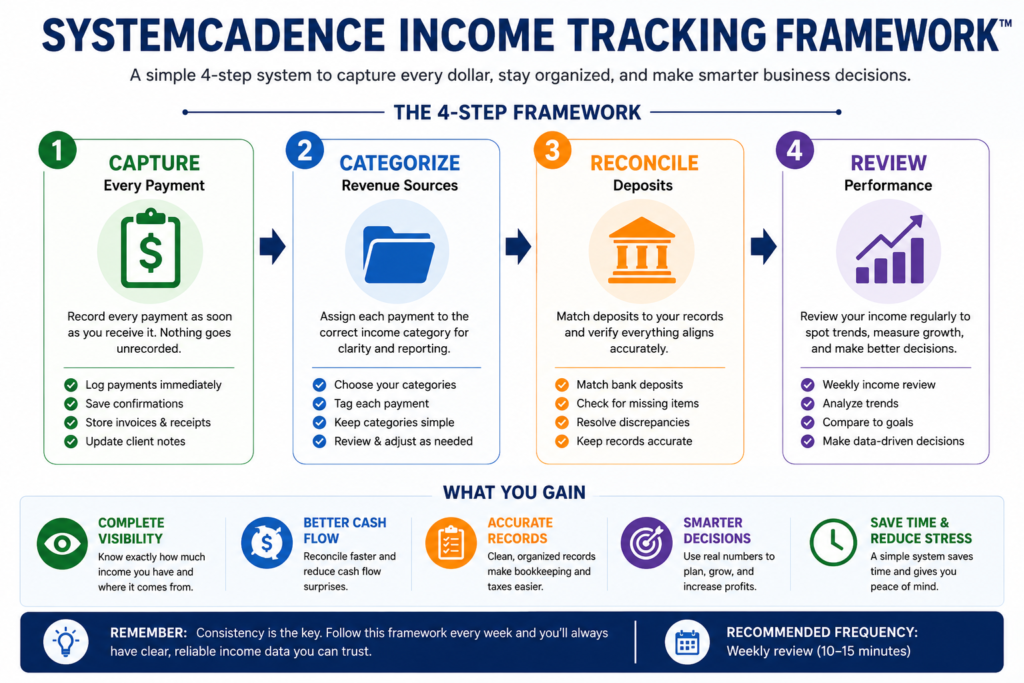
SystemCadence Income Tracking Framework showing the four-step income management process: Capture, Categorize, Reconcile, and Review.

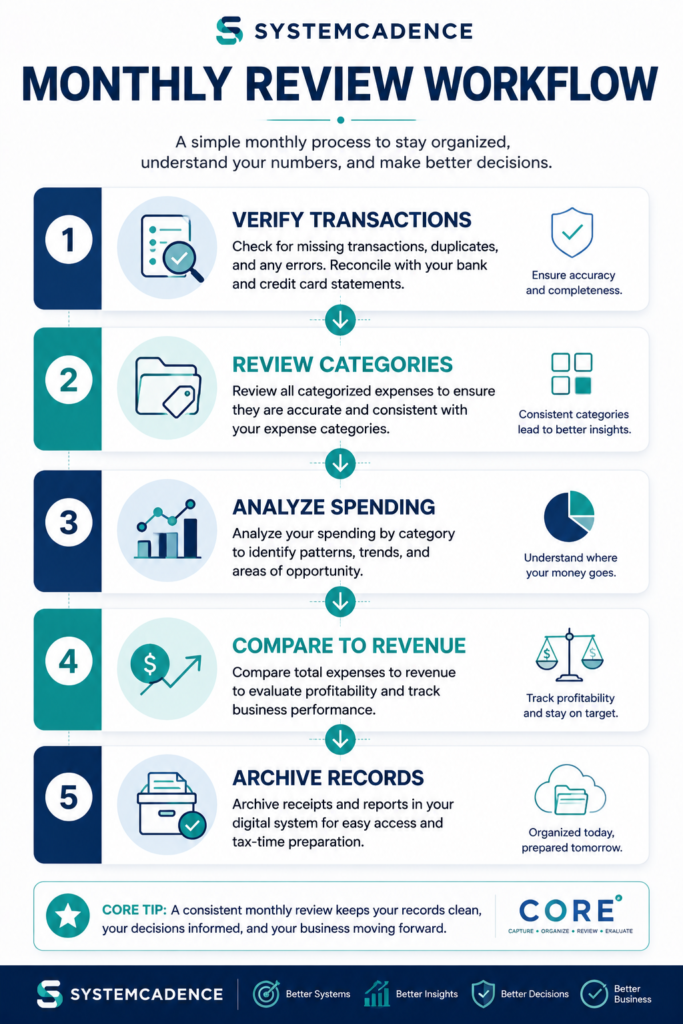
Build a practical expense tracking process for capturing, categorizing, reviewing, and managing business expenses throughout the year.
read now
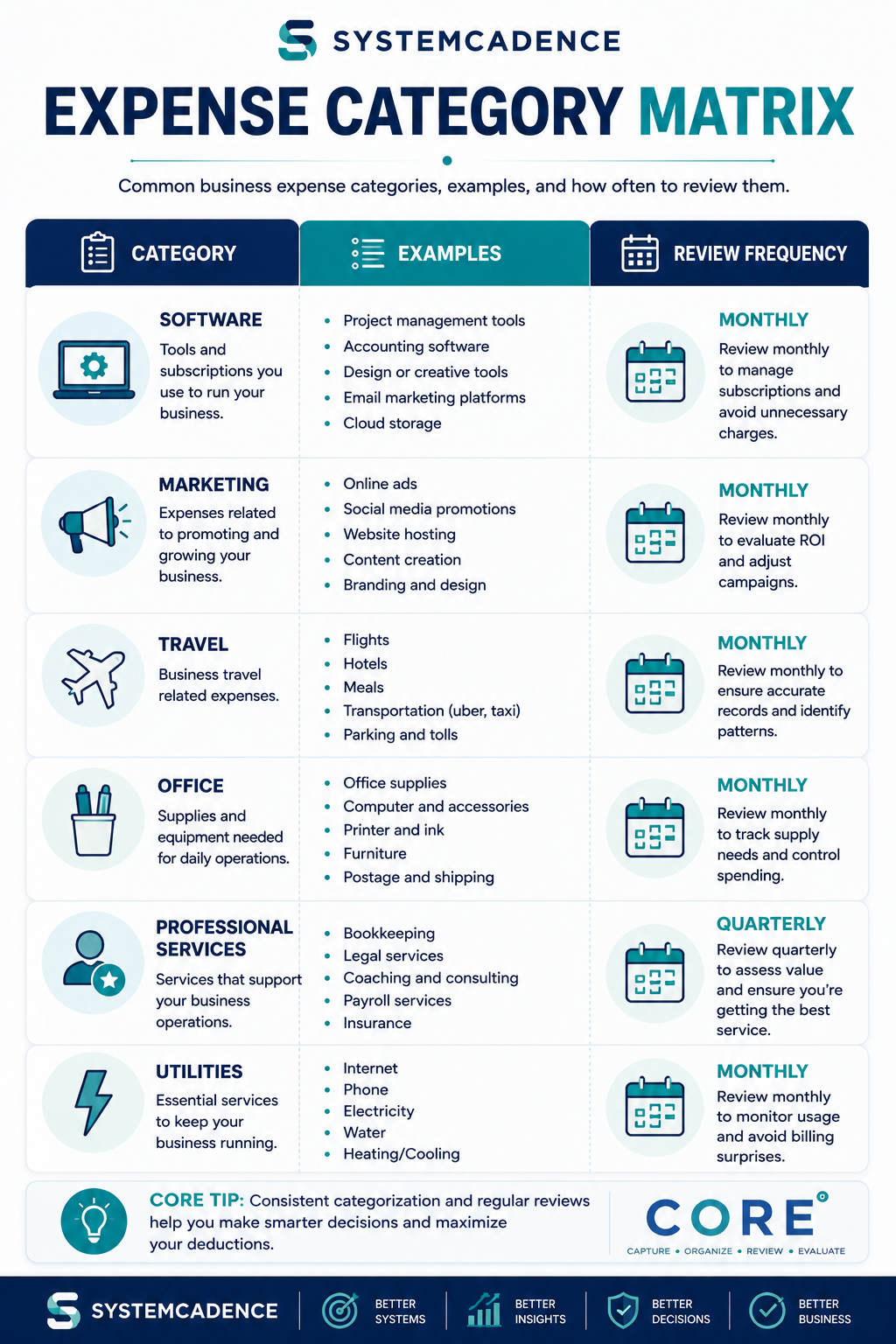
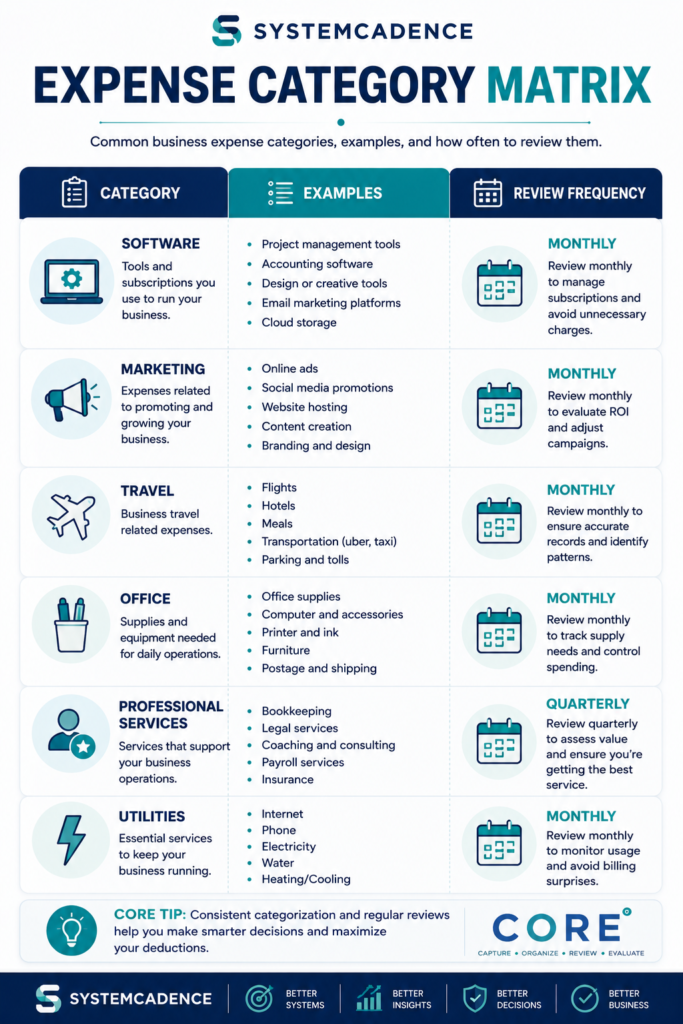
Business Expense Categories

Learn how to organize expenses into clear categories that improve bookkeeping accuracy, reporting, and tax preparation.
read now
Expense Tracker Template
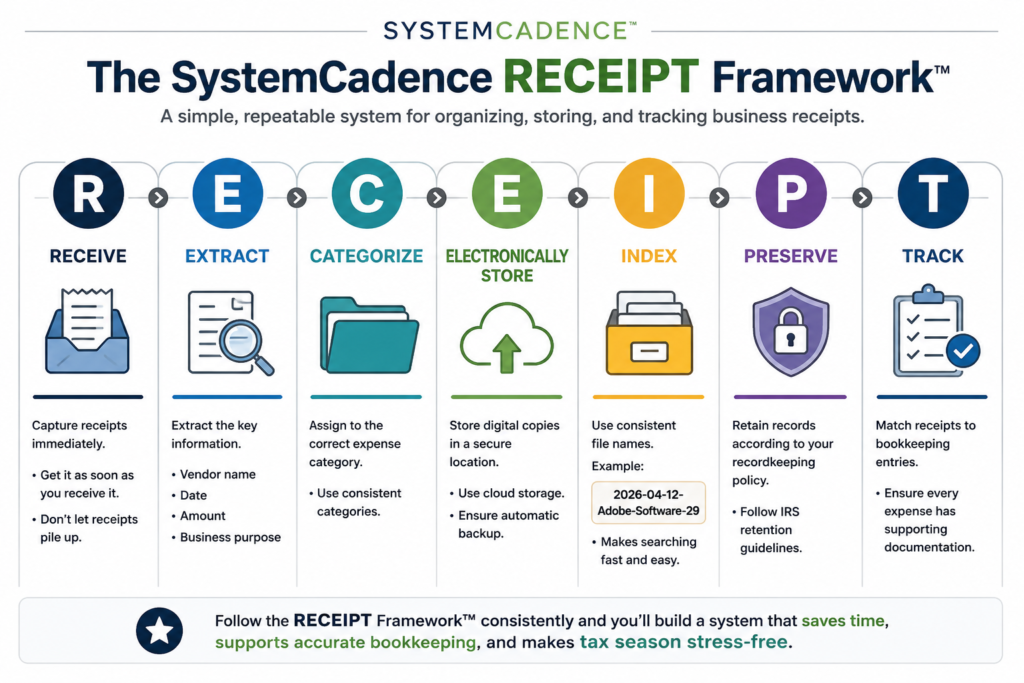
SystemCadence RECEIPT Framework showing a seven-step workflow for organizing business receipts: Receive, Extract, Categorize, Electronically Store, Index, Preserve, and Track.

Use a ready-to-use expense tracking template to record spending, organize transactions, and monitor business costs efficiently.

read now

Bookkeeping & Expenses

Receipt Management
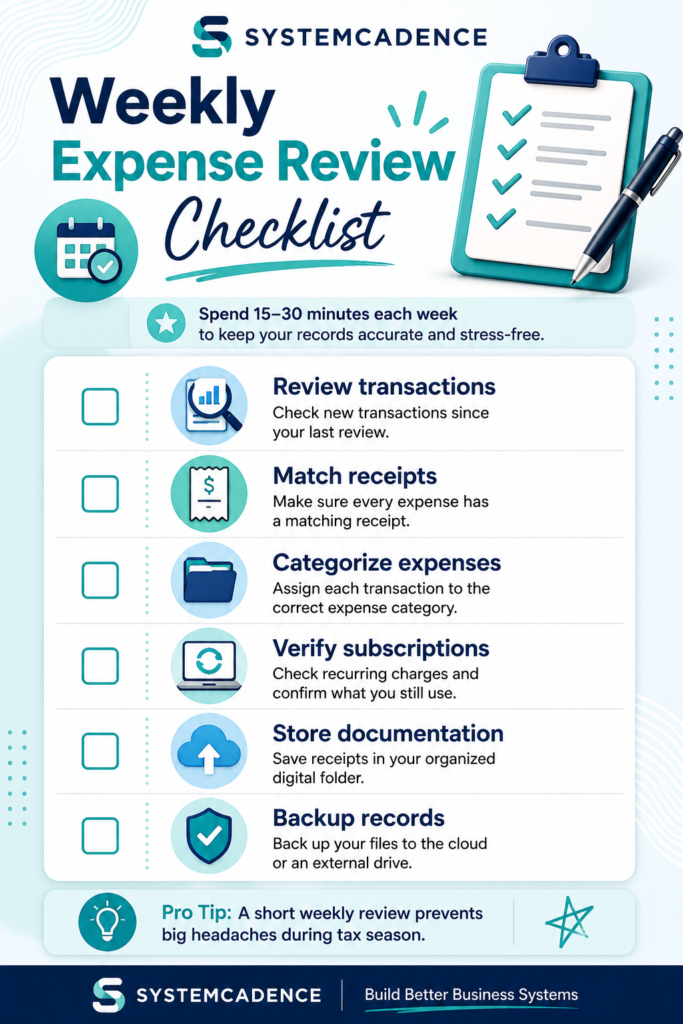
Receipt Management System

Create a reliable process for capturing, storing, and retrieving business receipts so important records are always easy to find.
read now
Receipt Tracker Template
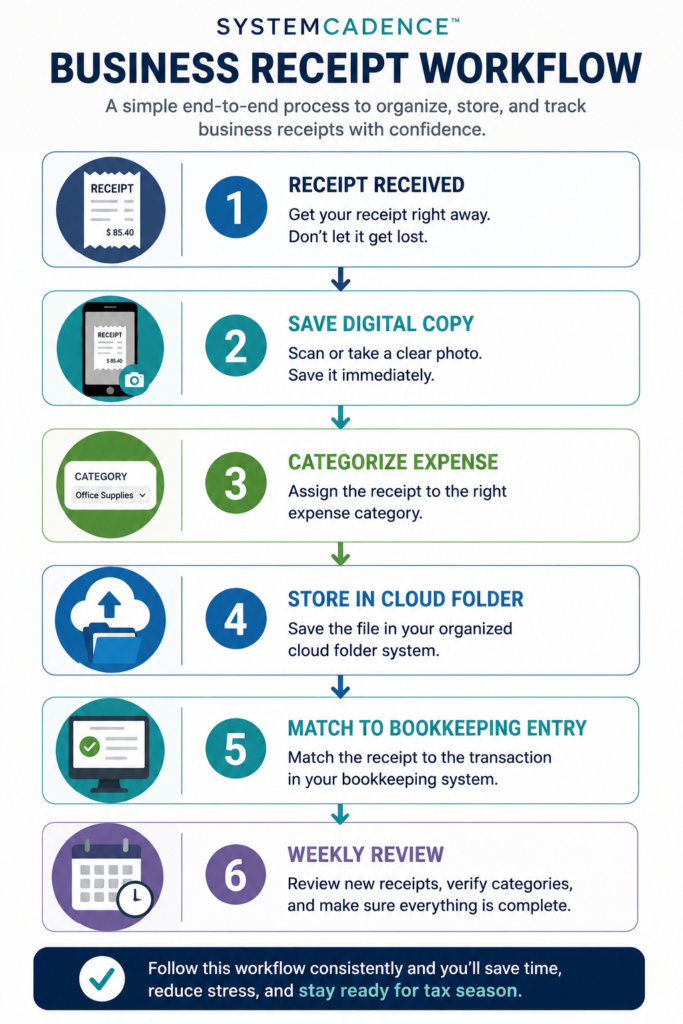
Business receipt workflow diagram showing the process from receipt capture to digital storage, expense categorization, bookkeeping matching, and weekly review.

Track receipts in one organized location and maintain supporting documentation for bookkeeping and tax purposes.
read now
How Long to Keep Business Receipts

Understand recommended business record retention timelines and learn how long receipts should be kept for tax and compliance purposes.

read now

Build a Complete Bookkeeping System

Expense tracking is only one part of maintaining organized financial records.

The resources in this hub help self-employed professionals create repeatable systems for:

  • Tracking expenses
  • Managing receipts
  • Categorizing transactions
  • Reviewing finances
  • Improving bookkeeping accuracy
  • Preparing for tax season

Together, these resources form the foundation of a reliable bookkeeping process.

Bookkeeping & Expenses

Recordkeeping
Business Recordkeeping Guide
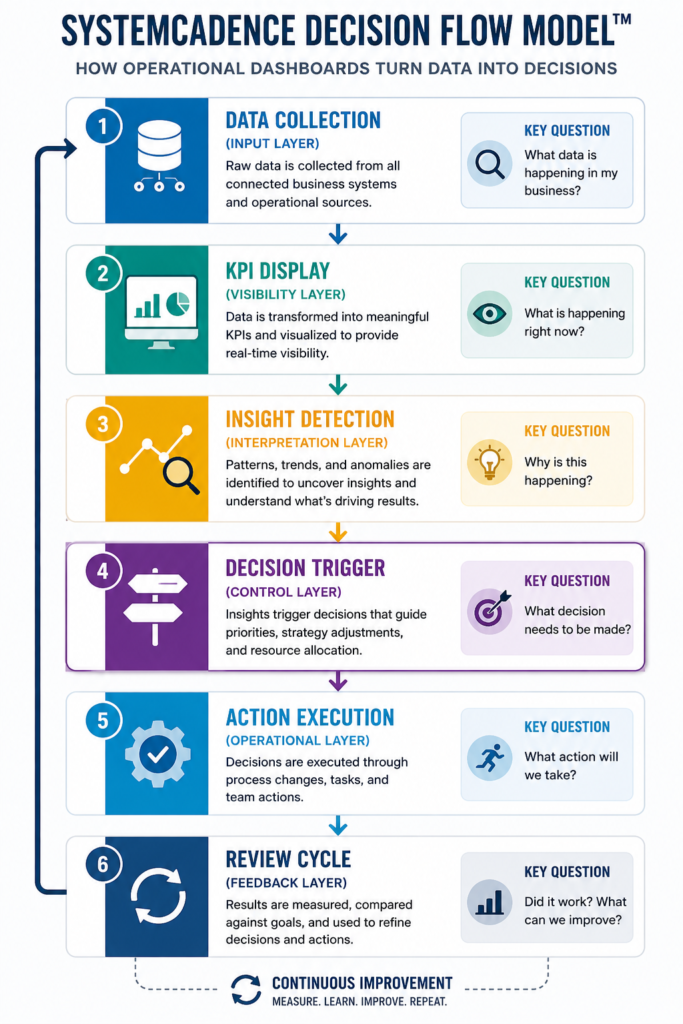
SystemCadence Decision Flow Model showing how business data moves through KPI tracking, insight generation, decision-making, action execution, and review cycles to drive continuous operational improvement.

Learn how to organize financial records, business documents, and supporting paperwork using a structured recordkeeping system.
read now
Financial Document Organization
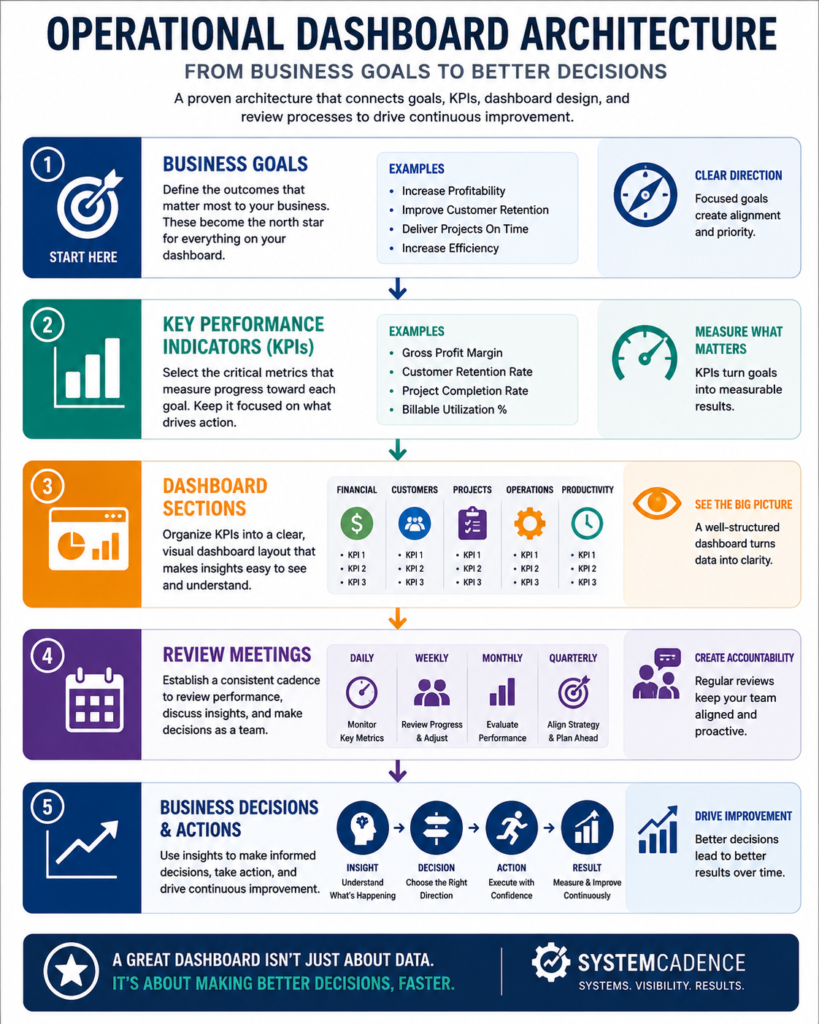
Operational Dashboard Architecture diagram showing how business goals connect to KPIs, dashboard sections, review meetings, and business decisions to create continuous operational improvement.

Create a centralized document management process that keeps important financial records organized and accessible year-round.
read now
Tax Record Retention Guide
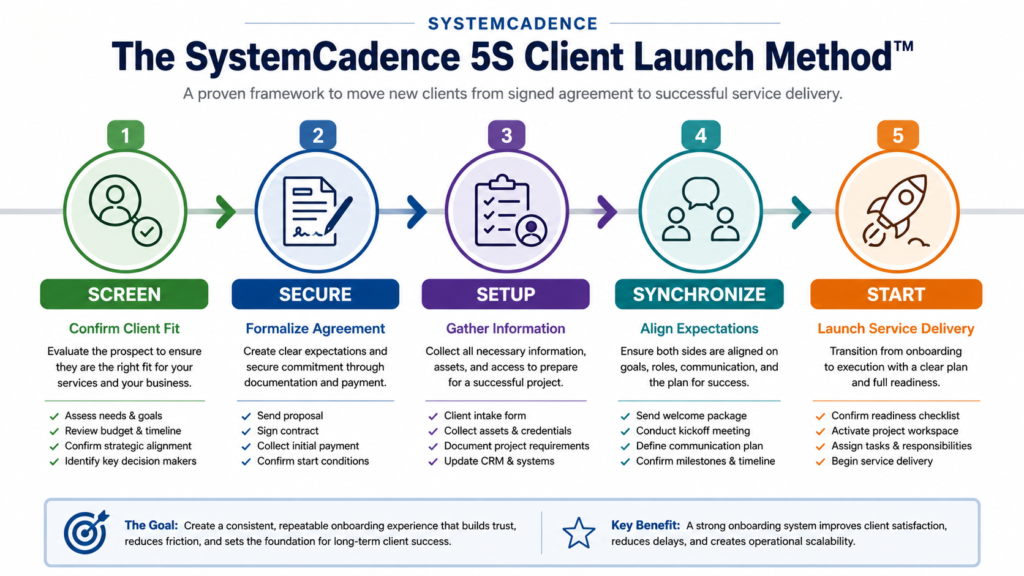
Diagram illustrating the SystemCadence 5S Client Launch Method™ for client onboarding, showing five stages: Screen, Secure, Setup, Synchronize, and Start, which guide clients from qualification through service delivery launch.

Understand which tax records to keep, how long to retain them, and how to maintain documentation for future reference.

read now

Continue Building Your Financial Systems

Explore additional guides, templates, systems, and resources designed to help self-employed professionals stay organized year-round.

Browse All Resources

Bookkeeping & Expenses FAQ

The best bookkeeping system is one that consistently tracks income, expenses, receipts, and financial records throughout the year. Most freelancers and independent contractors benefit from a simple workflow that combines expense tracking, receipt management, monthly reviews, and tax preparation processes. The goal is to create a repeatable system that supports accurate recordkeeping and better financial visibility.

Business expenses should ideally be reviewed weekly and analyzed monthly. Weekly reviews help ensure transactions are categorized correctly and receipts are not lost. Monthly reviews provide a broader view of spending patterns, profitability, and potential cost-saving opportunities.

Freelancers should maintain records for business income, expenses, receipts, invoices, bank statements, mileage logs, and tax-related documents. Keeping organized records throughout the year simplifies bookkeeping, supports tax reporting, and improves financial decision-making.

Not necessarily. Many self-employed professionals successfully manage expenses using spreadsheets, especially during the early stages of business growth. As transaction volume increases, bookkeeping software can help automate categorization, reporting, and record management. The most important factor is maintaining a consistent process.

The easiest way to track business expenses is to record transactions regularly, store receipts in a centralized location, categorize expenses consistently, and conduct routine reviews. A simple system used consistently is often more effective than a complicated system that is rarely maintained.

Start by separating business and personal finances, organizing receipts, and creating a simple expense tracking process. Focus on building basic habits first. Once records are organized, you can gradually implement more advanced bookkeeping systems and financial review processes.

Common mistakes include mixing personal and business transactions, losing receipts, waiting until tax season to organize records, skipping monthly reviews, and failing to maintain consistent expense categories. These issues can create unnecessary stress and make financial reporting more difficult.

Expense tracking helps identify where money is being spent and whether those expenses support business goals. By reviewing spending patterns regularly, business owners can eliminate unnecessary costs, monitor recurring subscriptions, and make more informed decisions about budgeting and growth.